Children's Digital Media Center
  • Welcome
  • About
    • Our Team
      • Our Directors
      • Collaborators
      • Alumni/ae
      • Undergraduate Researcher
    • Our Mission
  • Press
    • Reactions
    • News
  • Research
    • Publications – Patricia Greenfield, Ph.D.
    • Publications – Kaveri Subrahmanyam, Ph.D.
    • Publications – Yalda T. Uhls, Ph.D.
    • Other CDMC Research
    • For Parents & Educators
  • Presentations
  • Contact
  • Menu Menu
  • Link to Facebook
  • Link to X
  • Link to LinkedIn
Social interaction, Technology

New research: From Screen to Green: What happens to kids social skills when they go cold turkey on all media?
New research: From Screen to Green: What happens to kids social skills when they go cold turkey on all media?

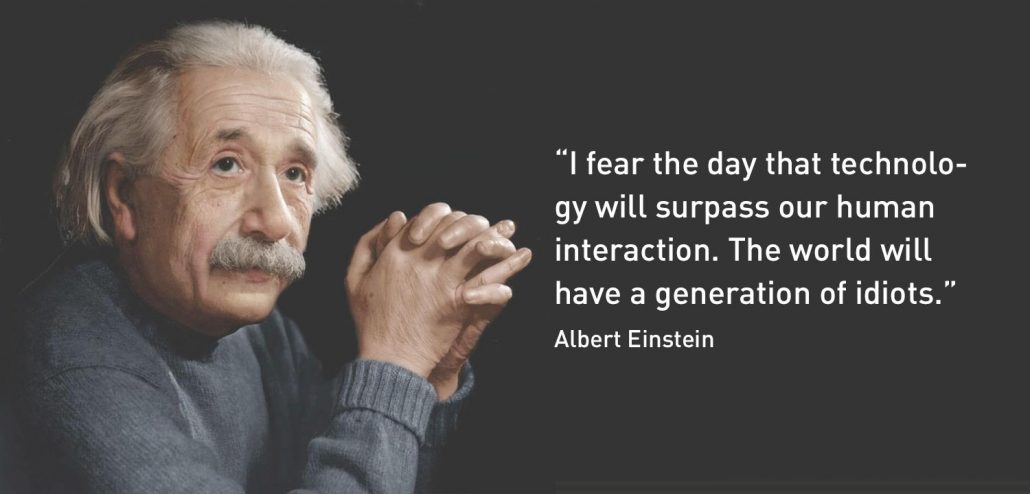
The fact is we all stare at screens more than we would like and many of us rely on these tools to communicate with others, even during times when we should be spending quality time with our families and friends. So does all this time staring at screens, which may take time away from looking at faces, change the nature of what we learn about the social world? Our study, at the Children’s Digital Media Center@LA, at UCLA, asked this question. We compared two groups of approximately 50 6th grade children each over a period of five days, one group had no access to screens of any kind, while the other did.

But how does one find young people willing to give up all media for a few hours, let alone five days (especially with no funding for the study!). We explored the ways we could guarantee that a large enough group of children would stop using media and found a simple solution. An outdoor education camp for public school children, the Pali Institute, came on as our partner.  The camp director worked with us to make sure that during the 5 days of the camp, children had zero access to screens of any kind – no TV, no phones, and no computers. This meant that the kids at the camp could only talk to other people using the form of communication our species has used for millions of years – face-to-face.


CONTINUE
Tags: social skills, Technology
Share this entry
  • Share on Facebook
  • Share on X
  • Share on Pinterest
  • Share on LinkedIn
  • Share on Tumblr
  • Share on Reddit
  • Share by Mail
https://www.cdmc.ucla.edu/wp-content/uploads/sites/170/2014/08/einstein-1.jpg 720 1500 trandrew https://sites.lifesci.ucla.edu/psych-cdmc/wp-content/uploads/sites/170/2022/08/logo4-300x100.png trandrew2014-08-31 23:59:242018-08-08 15:45:42New research: From Screen to Green: What happens to kids social skills when they go cold turkey on all media?
You might also like
Antisocial Networking? Antisocial Networking?
Social media affecting teens' concepts of friendship, intimacy Social media affecting teens’ concepts of friendship, intimacy
Internet could kill kids' emotion Internet could kill kids’ emotion
New Study Finds Too Much Screen Time Inhibits Kid’s Ability To Recognize Emotions New Study Finds Too Much Screen Time Inhibits Kid’s Ability To Recognize Emotions
Children May Be Losing Their Ability To Read Emotions, But There’s A Fix Study: Digital Media Erodes Ability To Read Emotional Cues
How the Internet is making us stupid How the Internet is making us stupid
When to Buy Your Child a Cellphone When to Buy Your Child a Cellphone
The effects of text, audio, video, and in-person communication on bonding between friends The effects of text, audio, video, and in-person communication on bonding between friends

Archive

  • January 2019
  • November 2015
  • September 2014
  • August 2014
  • June 2014
  • May 2014
  • April 2014
  • February 2014
  • April 2013
  • July 2011
  • August 2010
  • June 2010
  • May 2010
  • April 2010
  • February 2010

Categories

  • Bonding
  • Children
  • Children's Health
  • Computers
  • Digital presence
  • Facial Recognition
  • Friendship
  • Internet
  • Intimacy
  • Media
  • Social Cues
  • Social interaction
  • Social Media
  • Technology
  • Teenagers
  • Teens

CDMC Mission

Our mission is to study children, teens, and adults’ interaction with the newer forms of interactive digital media and to see how these interactions both affect and reflect offline lives, ecological conditions, and long-term development.

Contact Us

Patricia M. Greenfield
Distinguished Professor of Psychology, UCLA
Director, CDMC@LA

.

Yalda T. Uhls, Ph.D.
Associate Director, CDMC@LA
Assistant adjunct prof. at UCLA

Recent Posts

  • Do all those kids really like eggs? Or do they just like fame?
  • Meet the Instamom, a Stage Mother for Social Media
  • Too much screen time may worsen kids’ ability to read emotions
© Copyright - Children's Digital Media Center - Site by: C/MO - powered by Enfold WordPress Theme
  • Link to Facebook
  • Link to X
  • Link to LinkedIn
Link to: Face time vs. screen time: The technological impact on communication Link to: Face time vs. screen time: The technological impact on communication Face time vs. screen time: The technological impact on communicationFace time vs. screen time: The technological impact on communication Link to: New Study Finds Too Much Screen Time Inhibits Kid’s Ability To Recognize Emotions Link to: New Study Finds Too Much Screen Time Inhibits Kid’s Ability To Recognize Emotions New Study Finds Too Much Screen Time Inhibits Kid’s Ability To Recognize EmotionsNew Study Finds Too Much Screen Time Inhibits Kid’s Ability To Recognize ...
Scroll to top Scroll to top Scroll to top